 Rosina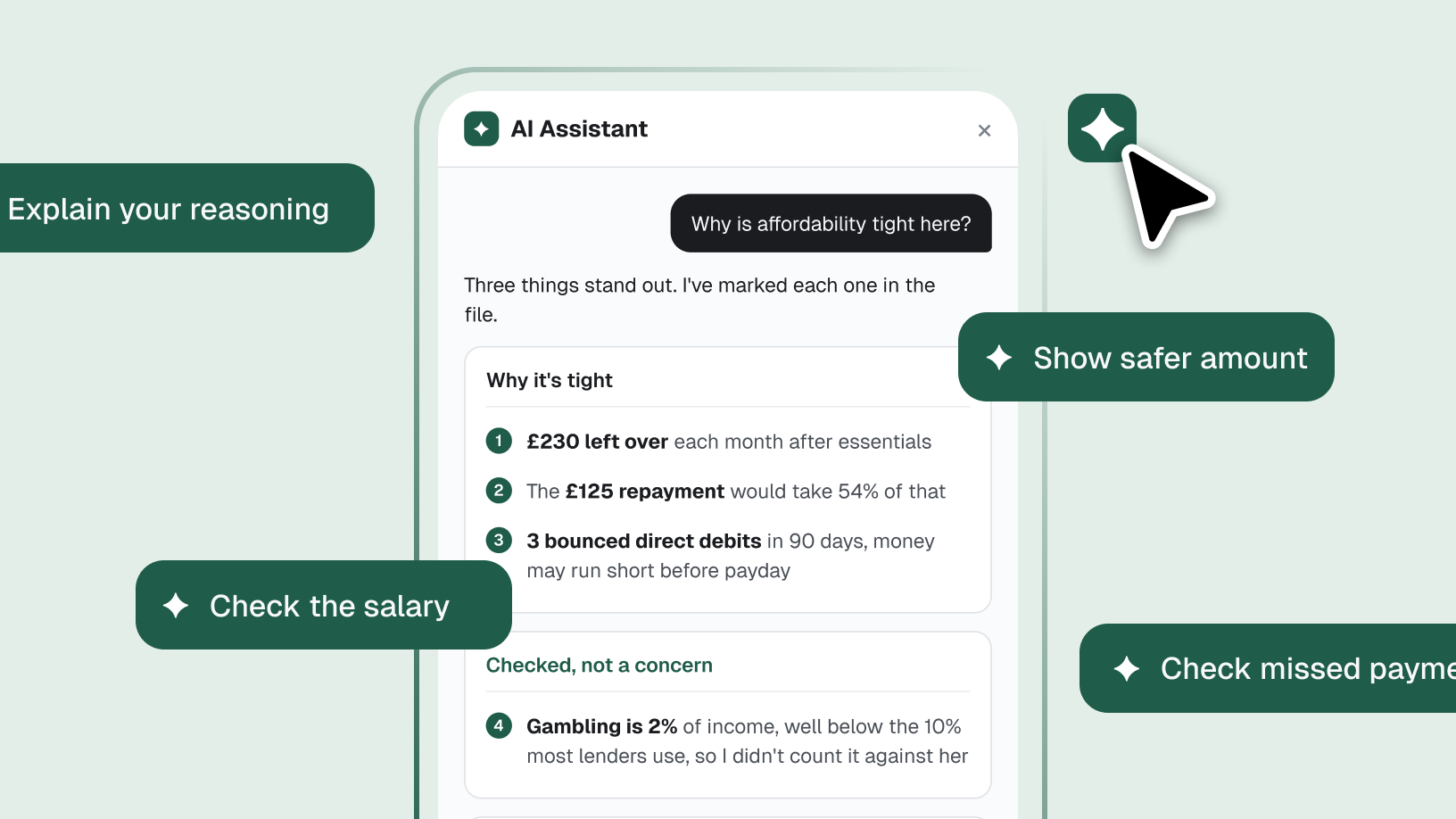
Interactive prototype
Pick a journey from the bar below. When the conversation pauses, click the highlighted option.
Sarah Okoye APP-20418
£2,500 over 24 months · Car repair · Referred by partner bank
Loan request
Affordability
Credit file
Open Banking
Concept prototype. Not a NestEgg feature. All applicants and figures are fictional.
The better the AI gets, the less people check it
AI can summarise a loan file in seconds. But in regulated lending, the officer is accountable for every decision. The challenge was to help officers find what mattered faster, while making the assistant’s reasoning easy to check.
An AI layer on the existing lender dashboard
The AI Assistant is designed as a layer on top of NestEgg’s existing lender dashboard, using the application data already available there. I designed the concept around that workflow, with explanations and proposed changes shown directly in the application.
Officers need to see what will happen before they confirm
Alongside reviewing research and UK guidance, interviews with loan officers helped the team understand their concerns about AI support in application reviews. The conversations explored how they would check a suggestion, spot missing information and review a proposed action before confirming it.
The design makes the supporting figures and proposed changes visible in the application, so officers can inspect them before deciding.
Alongside the interviews, I reviewed research on automation bias and UK guidance on AI explanations and oversight. These sources informed three design considerations: reducing over-reliance, making responsibility clear and preserving human judgement.
Over-reliance is well documented
A UK review of 74 studies found people over-rely on automated advice. Trust and experience shape how much. Emphasising the user's accountability reduces it.
A reason needs an owner
UK guidance names six parts of an AI explanation. Two are the rationale and the responsibility: who was involved, and who to contact for a human review.
Oversight has to be real
The regulators warn that AI "may limit or even potentially eliminate human judgement and oversight from decisions". They expect clear accountability for every use of AI.
The AI shouldn't be easy to believe. It should be easy to check.
Make the reasoning and proposed changes visible
The AI Assistant explains its reasoning and shows proposed changes in the application before the officer confirms them. These two examples show how transparency supports the officer’s judgement.
EXAMPLE 1 · HIGHLIGHT THE FIGURES
Link each explanation to the figure it describes
Each statement has a numbered marker that highlights the matching figure in the application.
(Journey 1 in the prototype)
EXAMPLE 2 · SHOW THE CHANGE
The change appears where it will land
A proposed action changes the application first. The requested amount is struck through next to the new one, on the loan line the officer already reads. Try sending it.
(Journey 4 in the prototype)
An assistant, not an autopilot
I considered an autopilot: the AI decides simple cases, officers review the exceptions. It's faster. But the explanation comes after the decision, and a wrong approval can harm the applicant.
Autopilot
The AI decides, people review exceptions
- Speed
- Fastest on simple cases
- Explanation
- Written after the decision
- Owner
- Unclear when it goes wrong
AssistantChosen
The AI suggests, the officer decides
- Speed
- One extra click per decision
- Explanation
- Built before the decision, from marked evidence
- Owner
- A named officer, every time
Speed alone would reward the wrong behaviour, so two of my three measures watch for over-trust:
Over-trust grows slowly. I'd test in two rounds: moderated sessions with loan officers on journeys 1 to 4, then a two-week pilot tracking evidence opens.